- What are the most important pool chemistry levels?
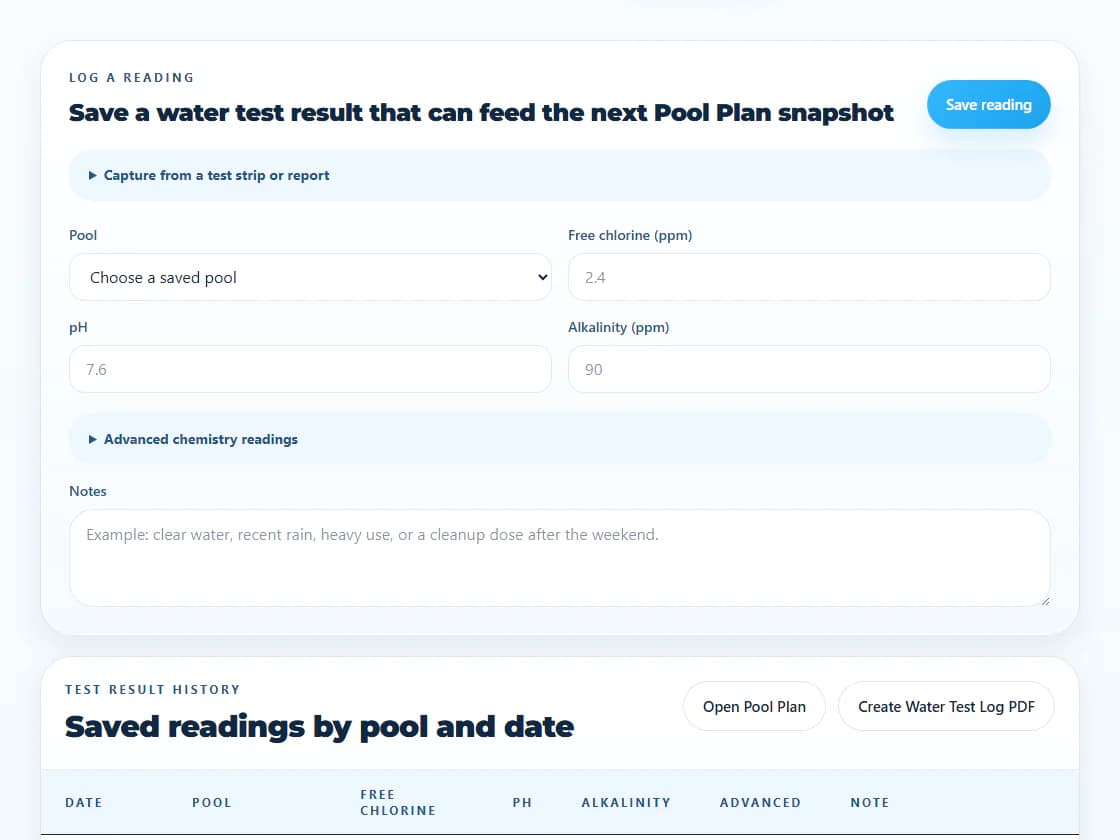
- Start with free chlorine and pH, then interpret them with combined chlorine, total alkalinity, cyanuric acid, calcium hardness, temperature, and salt when a salt system is present. The useful answer is the relationship among readings, not one universal target list.
- What should I adjust first in my pool?
- Handle safety and testing uncertainty first. For routine water, verify circulation and a fresh test, address major pH concerns deliberately, then plan sanitizer with CYA and water condition in view. Circulate and retest before stacking another correction.
- Can pH affect chlorine?
- Yes. pH changes chlorine's practical effectiveness and also affects swimmer comfort, surfaces, and scale pressure. That is why a chlorine reading should be reviewed with pH instead of treated as an isolated number.
- Is a saltwater pool chlorine-free?
- No. A salt chlorine generator converts salt into chlorine. The pool still needs free-chlorine testing, pH and alkalinity management, stabilizer context, calcium review, circulation, and cell-specific maintenance.
- What does cyanuric acid do?
- Cyanuric acid, or stabilizer, helps protect outdoor-pool chlorine from sunlight. It also changes how much free chlorine is practical to maintain, so FC should be interpreted with the CYA reading. FC/CYA operating methods are industry guidance, not CDC mandates.
- Why does my pool smell strongly of chlorine?
- A harsh odor can point to chloramines formed as chlorine reacts with contaminants. Test free and combined chlorine, review pH, clean and circulate the pool, and avoid assuming the answer is simply to lower or add chlorine.
- Can I add multiple pool chemicals at once?
- Do not mix pool chemicals or add incompatible products together. Follow each label, add products separately as directed, circulate for the required time, and retest. Stop if labels conflict or the situation involves fumes, a spill, or an overdose.
- How often should I test pool water?
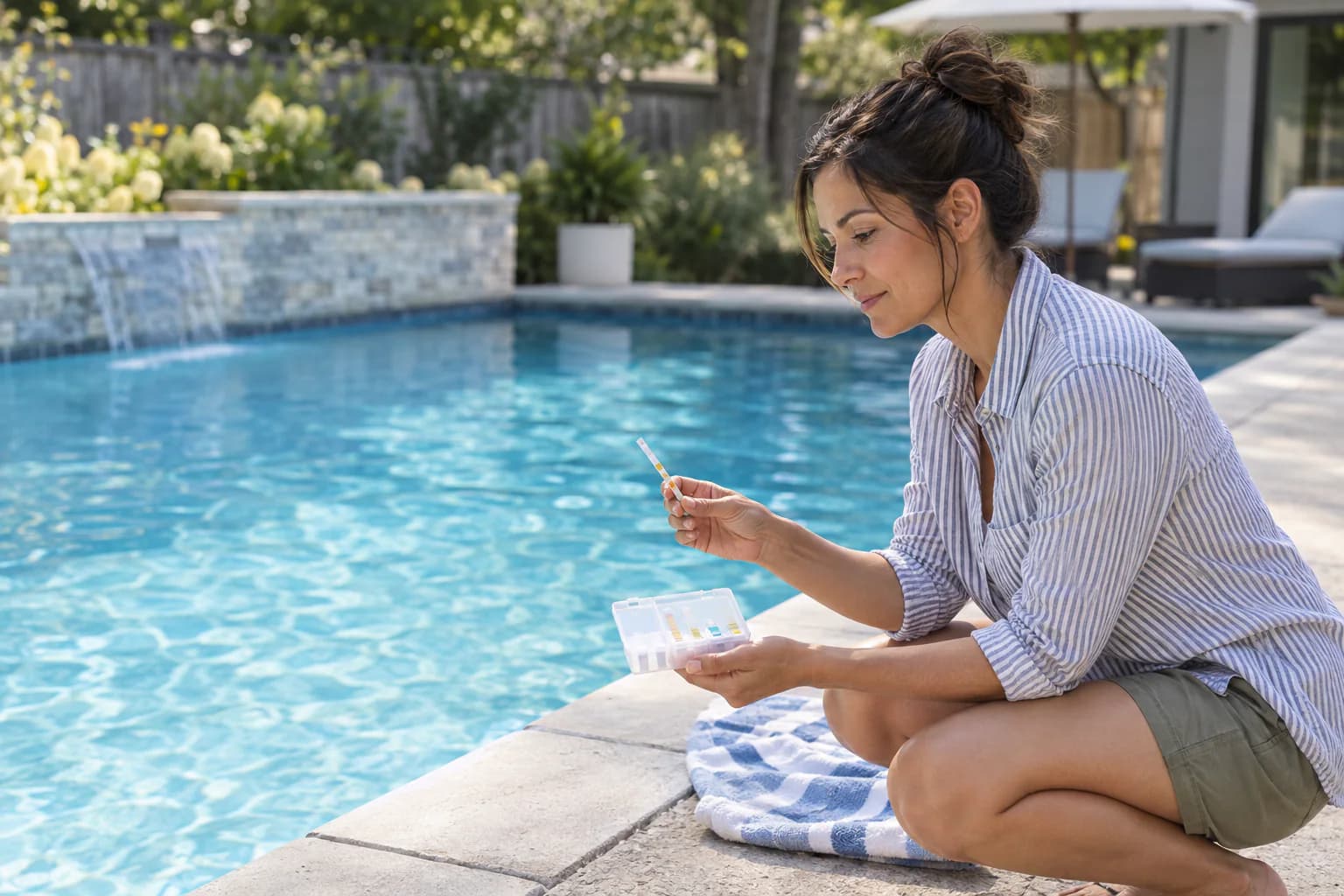
- CDC homeowner guidance recommends checking disinfectant and pH at least twice per day, and more often during heavy use. A residential routine can also require event-based checks after storms, heat, heavy swimming, dosing, or visible change; follow local and product requirements.