Guides built for the questions homeowners actually ask poolside
This library now covers opening, closing, water balance, troubleshooting, storms, saltwater care, and the moments when it is smarter to call a pro. Browse by difficulty or jump straight to the kind of problem you are trying to solve.
Avenblu
Pool care made simple means practical guidance, clearer language, and enough restraint to tell you when it is time to verify a label or call a professional.
Guides identify their research sources and distinguish public-health or regulatory guidance from industry operating practice and Avenblu’s conservative planning guidance.
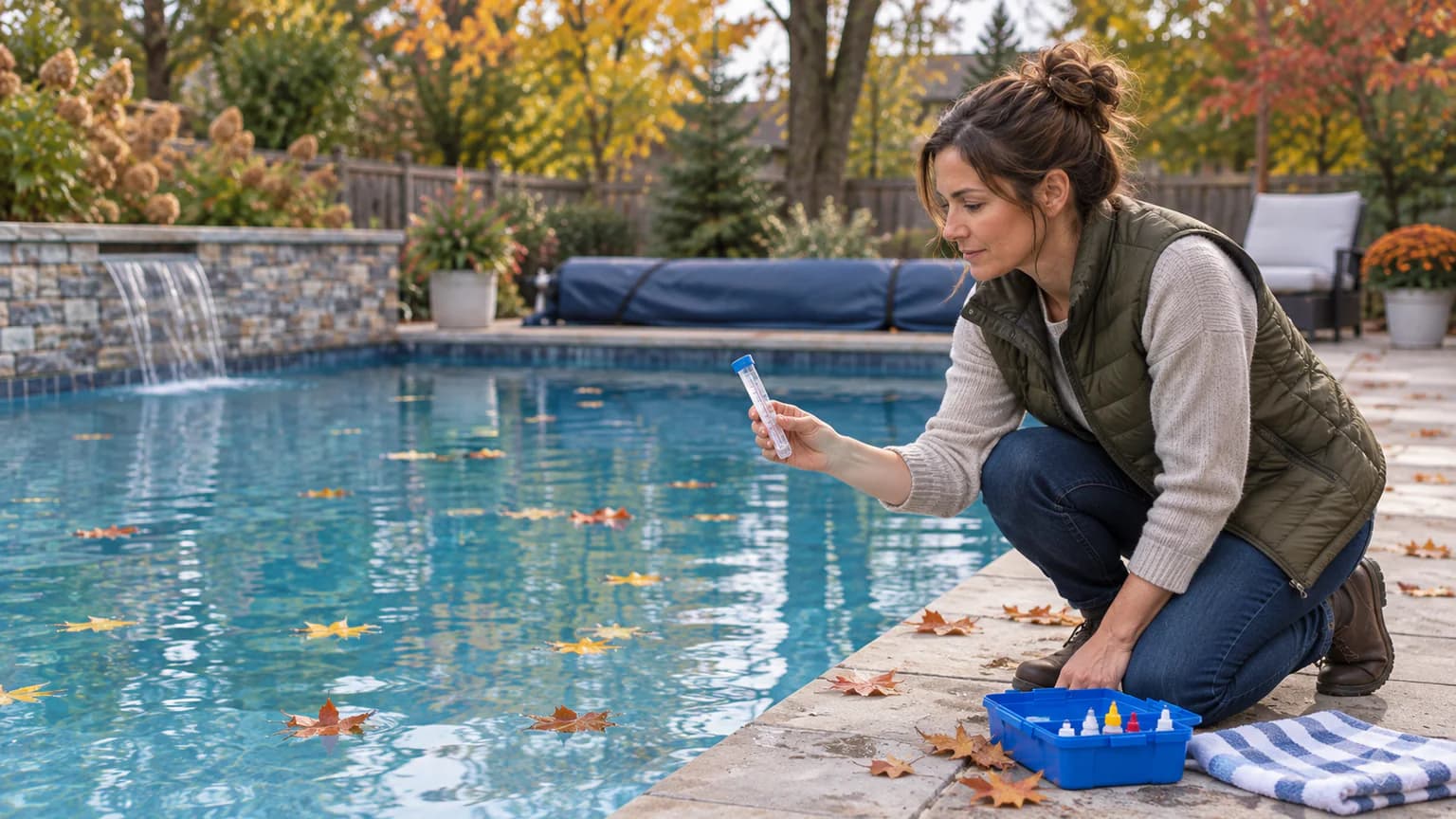
When Should You Close Your Pool? Use Water Temperature, Not the Calendar
Learn when to close your pool for winter, what water temperature to wait for, why closing too early can cause algae, and how timing changes by climate.
Closing too early can leave warm water under a cover while sanitizer demand is still high. Closing too late can put plumbing and equipment at risk when freezing weather arrives. The smarter signal is your pool's actual water temperature—plus your local freeze risk.
Monthly pool maintenance for the things your weekly pass can miss
A deeper once-a-month review for filters, drift, and equipment wear that does not show up in a simple skim-and-test routine.
Monthly work is where you catch the quieter problems: a filter that is losing ground, pH that keeps rebounding, or equipment that no longer sounds or looks normal.
Balancing chlorine properly without turning every problem into more chlorine
A practical homeowner guide to chlorine targets, testing rhythm, sunlight loss, and why dosage should follow evidence instead of panic.
Chlorine works best when you match the dose to the pool condition, give the water time to mix, and remember that pH, sunlight, debris, and swimmer load all change how fast the pool burns through sanitizer.
Water balanceRoutine careBeginner-friendly
Best when you keep bouncing between low chlorine, harsh smell, or repeated small corrections that never feel settled.
When to retest pool water so one correction does not become three guesses
A follow-up guide for homeowners who want better timing after a dose, a shock treatment, a storm, or a suspicious reading.
Retesting is where a lot of good maintenance plans either become disciplined or fall apart. The right interval depends on what just changed, how much the pool mixed, and whether the issue was simple or severe.
Routine careSafetyWater balanceBeginner-friendly
Best after any meaningful water change, cleanup treatment, or weird reading that you do not want to overreact to.